Mastering Weight Loss Coaching Techniques for Personal Trainers in 2026
Did you know that approximately 95% of solo dieting efforts fail within five years? This staggering statistic from the National Weight Control…

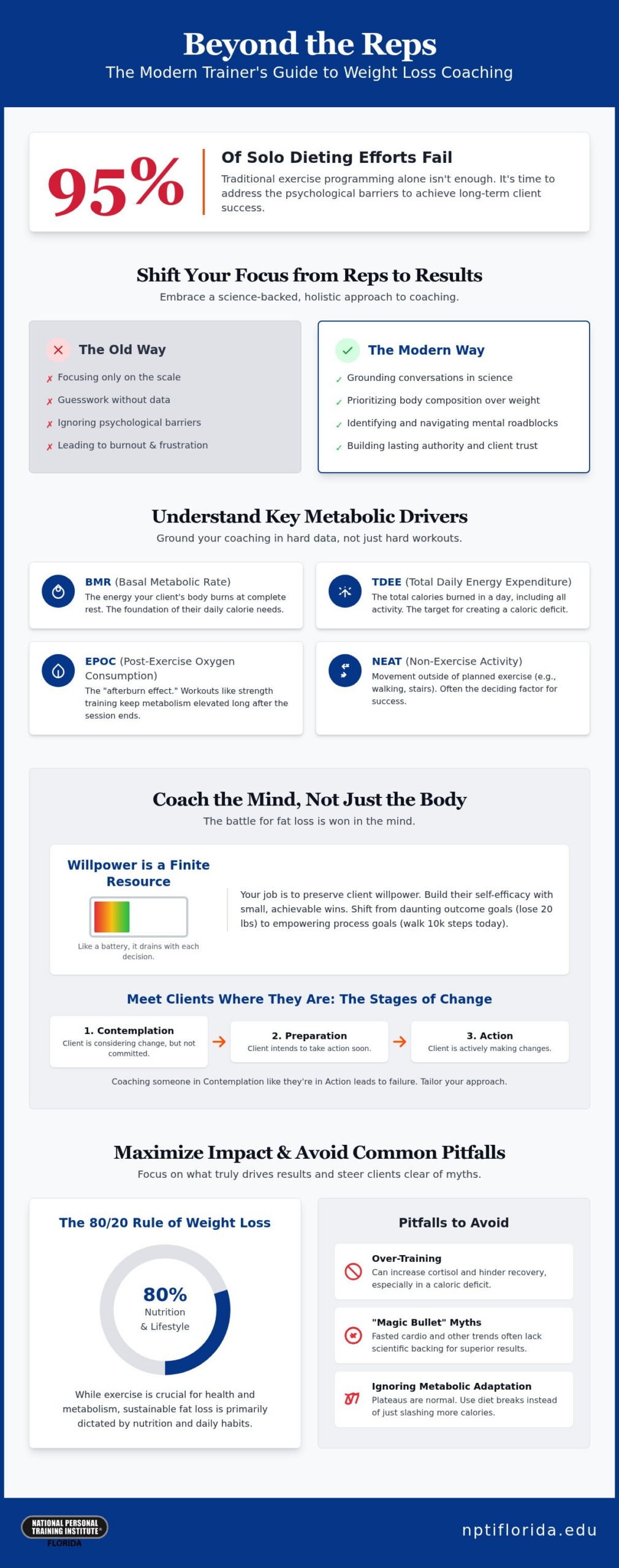
Did you know that approximately 95% of solo dieting efforts fail within five years? This staggering statistic from the National Weight Control Registry highlights a massive gap in the fitness industry that traditional exercise programming just cannot bridge. If you’ve watched clients lose motivation by week three or struggle with “cheating” on their plans, you know that physical instruction is only a small part of the equation. To truly thrive in 2026, you must master specific weight loss coaching techniques for personal trainers that address the psychological barriers standing between your clients and their long term goals.
You already know that a perfect macro split means nothing if a client won’t follow it, and you’re likely tired of the awkward conversations that follow a stalled scale. This guide will equip you with the science-backed behavior-change strategies that turn plateaus into breakthroughs and frustrated dieters into sustainable success stories. We’ll explore the essential psychology of habit formation, the impact of GLP-1 medications on modern programming, and the communication skills you need to become an indispensable career architect for your clients. It’s time to move beyond the clipboard and start leading with professional authority.
Key Takeaways
- Shift your focus from reps to results. Learn how to use physiological markers like BMR and TDEE to ground your coaching conversations in hard science rather than guesswork.
- Navigate the psychological “Stages of Change.” Implementing advanced weight loss coaching techniques for personal trainers allows you to identify mental roadblocks and preserve client willpower.
- Master the 80/20 rule of weight loss. Discover how to provide high-impact nutrition and lifestyle guidance that remains safely and effectively within your professional scope of practice.
- Stop the cycle of burnout. Recognize why over-training and “magic bullet” myths like fasted cardio often do more harm than good for clients who are already in a caloric deficit.
- Build lasting professional authority. Understand why a comprehensive, hands-on educational foundation is the key to handling complex cases and achieving superior client retention.
The Science of Weight Loss Coaching for Personal Trainers
Effective weight loss coaching is a multifaceted discipline. It requires a deep understanding of The Science of Weight Management to move beyond the simplistic “eat less, move more” mantra that often leads to client burnout. While the law of thermodynamics is absolute, the human body is a dynamic biological system, not a calculator. Successful weight loss coaching techniques for personal trainers involve balancing physiological data with psychological support and lifestyle modifications. You must guide your clients through the nuances of Basal Metabolic Rate (BMR) and Total Daily Energy Expenditure (TDEE) to provide a realistic roadmap for their journey.
Stop focusing solely on the scale. Scale weight is a blunt instrument that doesn’t distinguish between muscle loss, water fluctuations, and actual fat reduction. Your goal is fat loss, which preserves lean muscle mass and supports a healthy metabolism. When you explain the difference between “weight loss” and “body composition” to a client, you shift their perspective from a temporary diet to a long term physical evolution. This clarity builds trust and professional authority.
Metabolic Demand and Programming
Programming for fat loss requires more than just burning calories during a sixty minute session. You should design workouts that trigger Excess Post-exercise Oxygen Consumption (EPOC), which keeps the metabolic rate elevated long after the client leaves the gym. Strength training serves as the foundation here. Muscle tissue is metabolically expensive; the more your client has, the higher their resting metabolic rate becomes. Don’t overlook Non-Exercise Activity Thermogenesis (NEAT). The movement a client does during the 163 hours they aren’t with you often determines their success. Encourage walking, taking the stairs, and general movement to keep their TDEE high.
The Reality of Physiological Plateaus
Plateaus are a natural part of the process, yet they’re the primary reason clients quit. You must be prepared to coach them through metabolic adaptation. Metabolic adaptation is the body’s survival mechanism to reduced caloric intake. As the body becomes more efficient, progress slows. This is where advanced weight loss coaching techniques for personal trainers become vital. Instead of slashing calories further, consider implementing strategic diet breaks or maintenance phases. These periods allow the client’s hormones to stabilize and provide a much needed psychological reprieve, ensuring they have the stamina to reach their ultimate goal.
Psychological Weight Loss Coaching Techniques: Beyond the Reps
The battle for fat loss is rarely won on the gym floor. It is won in the kitchen, during high-stress work meetings, and in the quiet moments of self-doubt. To be a truly effective coach, you must look past the physical reps and master the mental ones. Utilizing the Transtheoretical Model, or the “Stages of Change,” serves as a vital diagnostic tool. You cannot treat a client in the “Contemplation” stage the same way you treat someone in the “Action” stage. If you push a rigid meal plan on someone who hasn’t even committed to the idea of change, you’ll see them drop off your roster by week three. Understanding these weight loss coaching techniques for personal trainers allows you to meet your clients exactly where they are mentally.
Willpower is a finite resource. It’s a battery that drains with every difficult decision a client makes throughout their day. If they spend eight hours resisting office snacks and managing high-stakes projects, they may have zero battery left for a grueling workout. Your job is to preserve that willpower by building self-efficacy. When a client believes they can succeed, their adherence skyrockets. Reference the CDC’s Guide to Healthy Weight Loss to help them set realistic, achievable milestones that fuel this confidence. Mastering the psychological side of the business is exactly why our Advanced Personal Training Program includes intensive modules on behavior change.
Shift the narrative from outcome goals to process goals. Losing twenty pounds is an outcome; it’s often slow and non-linear. Walking ten thousand steps daily is a process; it’s a daily win that the client can control. By celebrating the process, you keep motivation high even when the scale refuses to budge.
Motivational Interviewing for Fitness Pros
Stop lecturing and start listening. Motivational interviewing uses open-ended questions to uncover a client’s “True Why.” The OARS technique is your primary tool here. Use Open questions to let the client lead. Provide Affirmations to build their confidence. Use Reflections to show you understand their struggle. Conclude with Summaries that tie their personal values to their fitness goals. When a client expresses “sustained talk,” or excuses for not sticking to the plan, don’t argue. Reflect their concern back to them to help them find their own solution.
Overcoming Emotional Eating and Stress Barriers
Stress is a primary driver of caloric surplus. You must help clients identify environmental triggers that lead to emotional eating. Use “habit stacking” to create effortless change. If a client already has a morning coffee, have them stack a five minute stretching routine or a protein-rich breakfast with that existing habit. This links fitness to their current lifestyle rather than making it a chore. When you position exercise as a tool for stress management rather than a punishment for what they ate, you create a client for life.
Integrating Nutrition and Lifestyle Coaching into Fitness Programming
The gym is only four or five hours of your client’s week. That leaves 163 hours where their daily choices determine their results. This 80/20 reality is why effective weight loss coaching techniques for personal trainers must extend far beyond the weight rack. You aren’t just a physical instructor during their session; you’re a lifestyle architect. If you ignore what happens in the kitchen or the bedroom, your programming is only addressing a fraction of the problem. A client might burn 400 calories in a session with you, but they can consume 800 calories in a single “healthy” smoothie afterward. Without integrating nutrition and lifestyle coaching, your physical training is fighting an uphill battle.
Coaching modern meal planning isn’t about giving someone a rigid list of “good” and “bad” foods. It’s about teaching them how to navigate a world designed for overconsumption. Instead of a “chicken and broccoli” mandate, coach them on protein-first choices and volume eating. This empowers the client to make decisions in real-world scenarios, like business lunches or family dinners, where a pre-packaged meal plan would fail them. You should also address the physiological impact of sleep hygiene and cortisol. High stress and poor sleep don’t just make clients tired; they spike ghrelin and suppress leptin, making fat storage more likely and hunger harder to control.
Navigating the Scope of Practice
Precision is vital for your professional protection. You must distinguish between providing general “Nutritional Information” and “Medical Nutrition Therapy.” The former is within your right as a coach; the latter is a protected legal domain for Registered Dietitians. You can discuss Evidence-Based Dietary Strategies like protein pacing or fiber intake, but you should never prescribe a diet to treat a specific medical condition. If you’re uncertain about how to become a nutrition coach in Florida without overstepping these boundaries, The Definitive Guide to Choosing a Health and Nutrition Coaching Program in 2026 provides a thorough breakdown of Florida’s legal exemptions and scope of practice guidelines. Use food logs as a collaborative coaching tool to identify behavior patterns rather than a surveillance tool to catch “cheating.” If a client presents with complex metabolic disorders or disordered eating, refer them to an RD immediately. This professional boundary protects both your client and your career.
Lifestyle Auditing for Better Results
Success often stalls on Saturday morning. Many clients maintain a strict deficit all week only to erase it with “Weekend Overconsumption” during social events. Use coaching techniques that involve social support and proactive planning for these scenarios. Audit their sleep quality to ensure their hormonal balance supports fat loss rather than hindering it. If you want to master these high-level skills and build a stable career, you can read more about integrating them in The Ultimate Personal Training Program Guide. Addressing these hidden barriers is what separates a seasoned guide from a mere instructor.
Avoiding Common Mistakes in Weight Loss Programming
Mistakes in weight loss programming often stem from outdated myths or a “more is better” mentality that can actually hinder a client’s results. One of the most prevalent myths you’ll encounter is that fasted cardio serves as a magic bullet for fat loss. While training on an empty stomach might slightly increase fat oxidation during the session, total 24-hour energy expenditure remains largely unchanged. For many clients, this approach just leads to lower intensity and premature fatigue. Similarly, excessive High-Intensity Interval Training (HIIC) can backfire. Doing HIIT too frequently while in a caloric deficit can spike systemic inflammation and cortisol levels, stalling the very progress you’re trying to achieve. Successful weight loss coaching techniques for personal trainers prioritize recovery just as much as exertion.
Another critical error is ignoring non-scale victories (NSVs). If a client’s clothes fit better, their energy levels have stabilized, or they’ve mastered the habit of daily walking, they are winning. When you focus solely on the scale, you risk losing a client’s psychological buy-in during natural weight fluctuations. You must celebrate these behavioral wins to build the long-term momentum required for a total transformation.
The Trap of Aggressive Deficits
Aggressive crash diets are a recipe for muscle loss and eventual weight regain. They trigger a rapid decline in lean tissue and lead to metabolic adaptations that make maintenance nearly impossible. You must coach your clients to embrace a slower, more deliberate pace that respects their physiology. Sustainable fat loss typically ranges from 0.5 to 1% of body weight per week. This conservative rate preserves metabolic health and allows the client to develop the lifestyle habits necessary to keep the weight off for good.
Inconsistency in Data Tracking
Data should drive your coaching decisions, not emotional reactions to a single weigh-in. Many clients struggle with accurate self-reporting; they often under-report caloric intake and over-estimate their physical activity levels. Coach your clients on how to accurately measure portions and use body composition tools like skinfold calipers or bioelectrical impedance. While every method has pros and cons, consistency in the measurement process is what matters most. Using objective metrics allows you to adjust programming based on verified trends rather than feelings. If you want to learn how to manage these complex variables through 240 hours of hands-on lab work, explore our Advanced Personal Training Program today.
Elevating Your Career with Advanced Weight Loss Coaching Education
A weekend certification might give you a credential, but it won’t give you the confidence to handle a client struggling with metabolic adaptation or deep-seated emotional eating patterns. True mastery of weight loss coaching techniques for personal trainers requires a foundational investment in your own knowledge. In a market saturated with influencers and quick-fix courses, clients are looking for a stable guide they can trust. A 600-hour diploma sets you apart as a professional authority. It proves you have the stamina and depth to move beyond the surface. By positioning yourself as a Health and Nutrition Specialist, you don’t just train clients; you transform their lives. This level of specialization significantly increases your earning potential and establishes your professional longevity.
Choosing a comprehensive education means you’re prepared for the nuance of human physiology and behavior. Generic advice fails when a client hits their first major plateau. When you understand the science of weight loss coaching techniques for personal trainers, you can pivot your strategy with precision. You’ll have the vocational readiness to explain the “why” behind every adjustment, which builds the trust necessary for long-term client retention. This isn’t just about learning facts; it’s about becoming a career architect who can navigate the complex challenges of the modern fitness industry.
The NPTI Florida Advantage
Our Health and Nutrition Coaching module bridges the gap between counting reps and delivering actual results. We understand the “messy” reality of client psychology. That’s why our curriculum includes 240 hours of hands-on lab work. You’ll practice coaching cues in a real-world setting before you ever step onto a gym floor. This ensures you aren’t just reciting facts from a textbook but are instead capable of building custom solutions for every individual. For those balancing current jobs or family commitments, the Hyflex Fitness Training Program offers the perfect balance of flexibility and academic rigor.
Investing in a Career, Not Just a Job
Vocational training is a long-term investment in your future. The ROI isn’t just a higher hourly rate; it’s the security of being a recognized expert in a crowded field. As a veteran-owned institution with 25 plus years of experience, we take pride in supporting veterans and career changers as they find their niche. Our accreditation by the ACCSC ensures your education meets the highest professional standards, giving you the security of a recognized credential. Don’t settle for a basic certificate when you can build a legacy. Ready to lead? Apply to NPTI Florida today and start your journey toward professional excellence.
Master the Art of Lasting Transformation
The fitness landscape in 2026 demands more than basic exercise instruction. It requires a sophisticated grasp of human behavior and metabolic science. By mastering weight loss coaching techniques for personal trainers, you transition from a temporary instructor to a permanent career architect in your clients’ lives. You now understand that sustainable results depend on preserving willpower, navigating physiological plateaus, and maintaining a strict professional scope of practice. These aren’t just skills. They are the foundation of a high-impact, high-earning career.
Your journey toward professional authority starts with the right educational foundation. NPTI Florida provides a 600-hour comprehensive curriculum designed to bridge the gap between theory and the messy reality of client results. As an ACCSC Accredited Institution with over 25 years of fitness education excellence, we provide the hands-on lab work necessary to turn knowledge into instinct. We are proud to be veteran owned and operated, fostering a community of dedicated professionals. This is your moment to differentiate yourself in a crowded market.
Launch your career as a Weight Loss Specialist with NPTI Florida today. You have the passion to change lives, and we have the proven framework to help you do it.
Frequently Asked Questions
What is the most effective coaching technique for client weight loss?
Motivational interviewing is the most effective technique because it shifts the focus from external pressure to internal desire. By using open ended questions, you help clients discover their own deep seated reasons for change. This approach builds long term autonomy and ensures that the lifestyle shifts you recommend actually stick when life gets difficult or stressful.
Can a personal trainer give specific meal plans for weight loss?
Personal trainers should not provide specific, prescriptive meal plans unless they also hold a Registered Dietitian credential. Your professional role is to provide nutritional information and general guidance on macronutrients or portion control. Providing medical nutrition therapy without a license can lead to legal complications and puts your professional reputation and your clients at risk.
How do I help a client who has reached a weight loss plateau?
You help a client overcome a plateau by first auditing their current caloric intake and movement levels to ensure reporting accuracy. If they are truly stalled, implementing a strategic diet break or a maintenance phase can help reset their hormones and psychological drive. These weight loss coaching techniques for personal trainers prevent metabolic adaptation from halting progress entirely.
Is cardio or strength training better for weight loss coaching?
Strength training is the superior foundation because it builds metabolically active muscle tissue that increases resting energy expenditure. While cardio is excellent for immediate caloric burn and cardiovascular health, muscle mass ensures the client’s metabolism remains high during rest. A balanced program prioritizing resistance training will always yield the most sustainable body composition changes for your clients.
How do I handle a client who is unmotivated to follow their weight loss plan?
You handle unmotivated clients by revisiting their initial goals and identifying the specific environmental barriers draining their willpower. Sometimes the plan is simply too complex, which causes decision fatigue. Simplifying their daily tasks to just one or two non negotiable habits can rebuild their confidence and help them regain momentum without feeling overwhelmed by a massive lifestyle overhaul.
What should I do if a client’s weight loss goals are unrealistic?
When a client’s goals are unrealistic, you must use physiological data to reset their expectations toward a sustainable rate of loss. Explain that losing 0.5 to 1% of body weight per week is the gold standard for preserving muscle mass. Shifting their focus to non scale victories, like improved energy or strength, helps maintain their engagement during the longer journey.
How long does it take to see results with a weight loss personal trainer?
Most clients begin to see noticeable changes in their energy levels and clothing fit within four to six weeks of consistent effort. While scale weight might fluctuate daily due to water retention or inflammation, true fat loss takes time. Establishing this realistic timeline early in the coaching relationship prevents frustration and helps the client stay committed to the process.
Do I need a special certification to be a weight loss coach?
You don’t need a separate weight loss certificate, but you do need a comprehensive education that covers both nutrition and behavior change. Mastering weight loss coaching techniques for personal trainers through a 600 hour diploma program provides the depth required to handle complex cases. This foundational knowledge ensures you are prepared for the professional and psychological demands of the industry.