Creating a Personal Training Business Plan: A Roadmap for Professional Success
Why do so many talented fitness professionals disappear from the industry within their first twenty four months? It isn’t a lack of passion or…

Why do so many talented fitness professionals disappear from the industry within their first twenty four months? It isn’t a lack of passion or exercise knowledge. Instead, it’s the absence of a professional foundation. Creating a personal training business plan is the critical pivot point where you stop being just a trainer and start being a career architect. You’ve likely felt the frustration of competing with “weekend certificate” instructors who lack your depth of knowledge. It’s time to build a structure that protects your time, validates your expertise, and ensures you aren’t just another statistic in a crowded market.
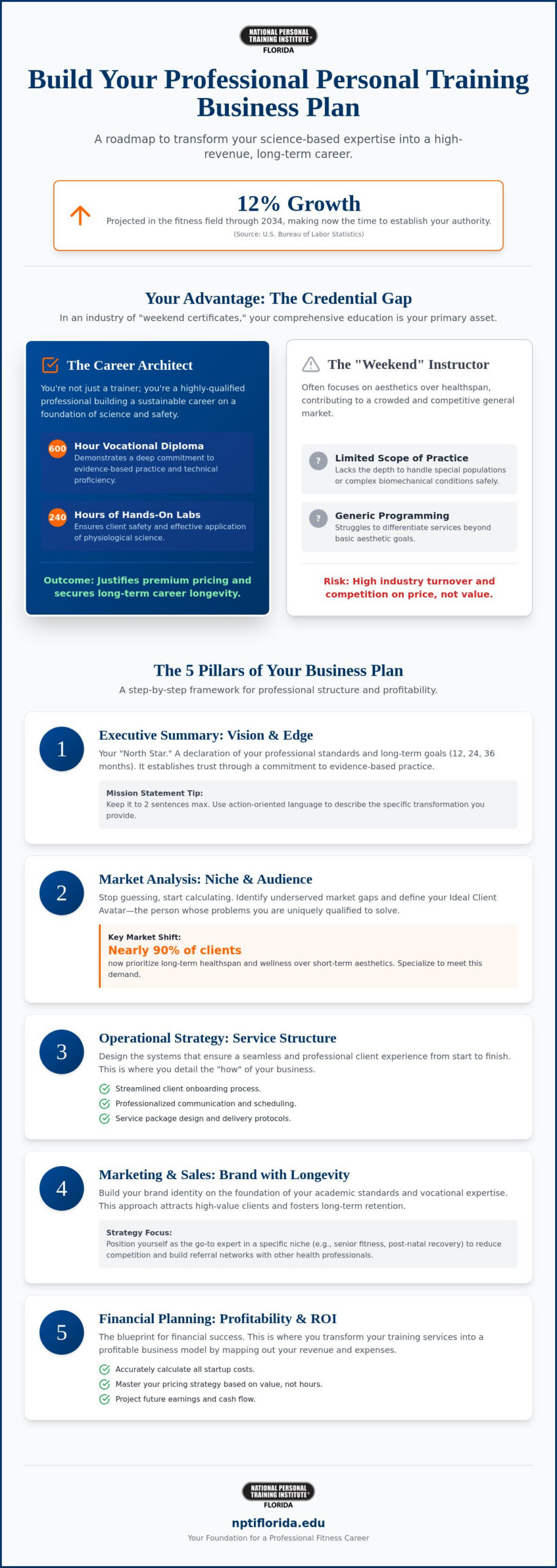
This article will show you how to transform your science based training into a high revenue business. We’ll explore the essential steps to define your niche, master your pricing, and secure your professional future. With the U.S. Bureau of Labor Statistics projecting 12% growth in this field through 2034, there’s never been a better time to establish your authority. You’ll gain a clear, actionable document that provides the confidence to lead your clients toward long term healthspan and longevity. Let’s build the roadmap for your professional success.
Key Takeaways
- Define a mission that transcends aesthetics by using your comprehensive education as your business’s core differentiator.
- Pinpoint underserved market gaps and identify your ideal client avatar based on your specific vocational strengths.
- Master the critical phases of creating a personal training business plan to accurately calculate startup costs and project future earnings.
- Design an operational strategy that streamlines client onboarding and professionalizes every touchpoint of your service.
- Build a brand identity rooted in academic standards to ensure career longevity and high-value client retention.
The Executive Summary: Defining Your Vision and Vocational Edge
Every professional venture begins with a clear, high level overview that captures the essence of the brand. When you start creating a personal training business plan, the executive summary serves as your North Star. It’s not just a summary; it’s a declaration of your professional standards. You aren’t just selling gym sessions. You’re providing a science based pathway to longevity. This section must articulate your 12, 24, and 36 month goals with precision. Whether you aim to manage 15 high value clients in your first year or expand into a multi trainer studio by year three, your roadmap starts here.
Your executive summary should immediately establish trust by highlighting a commitment to evidence based practice. Many trainers focus solely on aesthetic outcomes like weight loss. You can distinguish yourself by focusing on comprehensive health transformations. By rooting your business in physiological science, you reassure potential partners and clients that your methods are safe, effective, and sustainable. This professional gravity is what transforms a side hustle into a high revenue career.
Crafting a Mission Statement That Converts
A powerful mission statement acts as your business’s heartbeat. It should describe the specific transformation you provide using action oriented language that resonates emotionally. Avoid generic phrases. Instead of saying you “help people get fit,” try: “I empower high performing professionals to reclaim their functional strength and metabolic health through rigorous, science based coaching.” Keep it to two sentences maximum. This clarity ensures that every person who reads your plan understands exactly who you serve and why your work matters.
The ‘Credential Gap’: Why Vocational Training is Your USP
Your educational foundation is your primary competitive advantage. In an industry crowded with “weekend certificate” instructors, your depth of knowledge is your greatest asset. A 600 hour vocational diploma, which includes 240 hours of hands on lab time, creates a massive “credential gap” between you and the average trainer. This isn’t just a number. It represents a level of technical proficiency and client safety that justifies premium pricing.
Position yourself as a Career Architect rather than a temporary gym instructor. When you can demonstrate that your training is backed by hundreds of hours of supervised practice and academic rigor, you eliminate the fear of business failure. You’re offering a superior product built on a foundation of quality. Use this section of your plan to highlight your specialized expertise in areas like nutrition coaching or training for special populations. This vocational edge is what secures your professional niche and ensures long term career longevity.
Market Analysis: Identifying Your Niche and Target Audience
Market analysis is the phase where you stop guessing and start calculating. When you’re creating a personal training business plan, you need to understand that the fitness landscape is shifting toward longevity. Recent industry data shows that nearly 90% of clients now prioritize healthspan and long term wellness over short term aesthetics. This means the old model of “six pack abs” is losing ground to functional longevity. To succeed, you must analyze your local competition to see who is actually meeting these needs. Most big box gyms offer generic programs. You can stand out by offering precision. Use resources from the U.S. Small Business Administration to write a business plan that accounts for these evolving market trends.
Your Ideal Client Avatar shouldn’t just be someone who wants to exercise. It should be a specific person whose problems you are uniquely qualified to solve. Are they a 55 year old executive recovering from a knee replacement? Or a post natal mother looking to regain core stability? By narrowing your focus, you actually expand your earning potential. You become the go-to expert rather than a generalist. This specialization allows you to charge premium rates because your value is tied to specific, high stakes outcomes. It’s about solving a problem, not just counting reps.
The Riches are in the Niches: Special Populations
Specializing in senior fitness or corrective exercise is a strategic move to reduce direct competition. While hundreds of thousands of trainers are fighting over the general fitness market, very few have the technical depth to handle orthopedic or biomechanical conditions safely. Your training in these areas allows you to build a referral network with local doctors and physical therapists. A comprehensive personal training program provides the 240 hours of lab time necessary to master these complexities. This hands on experience ensures you can handle high value clients with total confidence.
Integrating Health and Nutrition Coaching
Nutrition is often the missing link in client success. It’s the primary reason clients fail and eventually quit. By integrating Health and Nutrition Coaching into your business model, you solve the number one pain point of client adherence. This isn’t just an add on service. It’s a scalable revenue stream that you can offer as a standalone digital package or a premium hybrid bundle. Mapping out this synergy in your plan shows partners that you understand the holistic nature of modern fitness. It transforms your business into a comprehensive wellness solution rather than just another gym membership.
Operational Strategy: Structuring Your Services for Success
Operational excellence is the bridge between a good idea and a profitable reality. When you’re creating a personal training business plan, your operational strategy must detail the mechanics of how you deliver value every single day. First, you must select a legal structure. Whether you choose a Sole Proprietorship for its simplicity or an LLC for liability protection, this decision dictates your tax obligations and personal risk. You can consult resources like Forbes on How To Write A Business Plan to ensure your legal and operational foundations are airtight from the start.
Your facility strategy is equally critical. Will you lease a boutique studio, travel to clients’ homes, or operate within a larger commercial gym? Each choice has distinct overhead costs and equipment requirements. If your methodology focuses on corrective exercise, you’ll need specialized tools like resistance bands and assessment software. If you’re focusing on strength, power racks and free weights become your primary investment. Detail these needs clearly to avoid unexpected capital expenditures later.
Designing the Client Journey
The client journey begins long before the first rep. It starts with a comprehensive assessment that evaluates posture, movement patterns, and specific metabolic goals. This isn’t just a formality. It’s a professional necessity that ensures safety and builds trust. Once you’ve gathered this data, you move into custom program design based on science based foundations. Finally, your operations must include regular progress tracking and behavioral coaching touchpoints. This systematic approach ensures that clients don’t just see results; they understand the professional process driving their transformation.
The Hyflex Advantage: Hybrid Training Models
Modern fitness professionals no longer rely solely on in person sessions. The integration of online and in person training is now a dominant industry trend. By offering a hybrid model, you increase your business resilience and reach clients who may not be able to visit you physically every week. Managing this requires specific software tools for workout delivery and communication to maintain a high level of accountability.
Embracing a Hyflex Learning Program approach allows you to scale your time while maintaining the high touch experience clients expect. Current data shows that 65% of training programs now incorporate wearable technology to monitor client progress remotely. This data driven approach allows you to provide value without being physically present for every single workout. Your operational strategy should clearly outline how you will balance these remote interactions with your hands on lab sessions to maximize both client results and your own revenue potential.
Marketing and Sales: Building a Brand with Longevity
Marketing is often misunderstood as mere promotion. In reality, it’s the bridge between your deep vocational expertise and the client’s specific health goals. When creating a personal training business plan, your marketing strategy must move beyond generic fitness tropes and vanity metrics. You need to build a brand identity that reflects professional academic standards. This means your messaging should signal reliability, safety, and science based results. By positioning yourself as a professional rather than just a “hustler,” you attract high value clients who are looking for a long term health partner.
Authority Marketing: Promoting Your Science-Based Expertise
Your 600 hour diploma is your most potent marketing tool. Use it to create a content strategy that educates rather than just “sells.” Write blogs or social posts that explain the “why” behind specific exercises, such as the biomechanics of spinal stabilization or the metabolic benefits of resistance training. When you provide this level of depth, you build immediate trust with skeptical clients. You’re positioning your brand as the safe and effective alternative to the sea of unqualified fitness influencers. This authority allows you to command higher rates because your value is rooted in proven science.
Sales Without the ‘Sleaze’
Sales should feel like a natural extension of your service. Focus on consultative selling by using the initial assessment to identify and solve the client’s primary pain points. If a lead mentions they’re struggling with joint pain, show them exactly how your program addresses mobility and corrective exercise. Structure your pricing packages to encourage long term commitment, such as three or six month blocks. This ensures better client results and provides your business with predictable, recurring revenue. Don’t forget to develop a methodical follow up system for leads who haven’t converted yet; persistence is a sign of professional care, not desperation.
Establish a robust referral network by connecting with local healthcare professionals. Doctors and physical therapists are constantly looking for qualified trainers to whom they can safely refer their patients. Presenting your credentials and your business plan to these professionals proves you’re a serious practitioner. Finally, utilize social proof ethically by sharing success stories that highlight functional improvements, such as increased bone density or improved mobility. If you’re ready to build this level of professional authority, consider enrolling in a Personal Training Specialist Program to solidify your competitive advantage.
Financial Planning: Ensuring Profitability and ROI
Financial planning is the final, essential pillar in creating a personal training business plan. It’s the moment you transition from a fitness enthusiast to a legitimate business owner. To ensure long term career longevity, you must calculate your startup costs with vocational precision. This includes your initial marketing spend, equipment, and professional fees. Once these numbers are clear, you can determine your break even point. This is the specific number of clients or sessions required each month to cover your overhead. Knowing this number eliminates the fear of business failure and allows you to make data driven decisions about your professional growth.
Your pricing should never be a guess based on what the trainer down the street charges. Instead, set professional rates that reflect your 600 hour vocational edge and the specialized results you provide. Research shows the average annual salary for personal trainers in the U.S. is $62,000, but those who leverage specialized education often exceed this. You must also plan for the “lean months” by building a cash reserve. Seasonality is a reality in the fitness industry; having three to six months of operating expenses tucked away ensures your business remains stable during slower periods like late summer or the mid winter plateau.
Calculating the ROI of Your Education
Think of your education as a foundational investment rather than a one time expense. You can amortize the cost of your diploma over your first year of full time training to see the true return on investment. A specialized client, such as someone seeking Senior Fitness or Stretch Coach expertise, has a significantly higher lifetime value (LTV) than a generalist client. They stay longer and are less price sensitive because they value your specific technical proficiency. By entering the market with professional grade skills, you save years of trial and error, moving straight into a high revenue career path.
Essential Protections: Insurance and Legal
Budgeting for professional liability insurance is a non negotiable step for any independent trainer. Industry data suggests solo trainers typically pay between $35 and $60 per month for core liability coverage. You should also factor in the costs of business licenses and annual registration fees to keep your entity in good standing. Finally, financial discipline is key to long term success. Set aside a fixed percentage of every session for quarterly taxes and your own retirement. This level of financial rigor is what separates a temporary job from a lifelong profession. If you’re ready to build this foundation, exploring an Advanced Personal Training Program can provide the high level skills that justify your professional fees.
Step Into Your Future as a Fitness Leader
You now have the framework for a resilient, high revenue career. By defining your vocational edge and structuring your operations around science based foundations, you’ve moved beyond the “weekend cert” crowd. Successful trainers don’t just hope for clients; they engineer their success through meticulous market analysis and financial rigor. Creating a personal training business plan is the definitive step that separates a hobby from a high impact profession. It ensures that your passion for health is backed by a structure that supports growth and career longevity.
Ready to turn this roadmap into reality? NPTI Florida is an ACCSC Accredited Institution, veteran owned and operated for over 25 years. We provide the deep hands on lab training you need to stand out in a competitive market. Launch your career with an accredited 600-hour Personal Training Diploma and start building your legacy today. Your journey from enthusiast to expert begins with a single, professional decision. We’re here to guide you every step of the way.
Frequently Asked Questions
Do I really need a written business plan as a solo personal trainer?
Yes, a written plan is essential because it serves as your operational blueprint. Without it, you’re simply reacting to the market instead of leading it. Creating a personal training business plan forces you to confront your overhead, marketing strategy, and long term goals before you spend a single dollar. It transforms your fitness passion into a sustainable, professional career.
What is the most important part of a personal training business plan?
The Executive Summary is the most critical component because it defines your vocational edge. It clearly articulates why a client should choose you over a generic trainer. When you highlight a 600 hour diploma and 240 hours of lab time, you immediately establish professional trust. This section anchors your entire brand identity in science based foundations and technical proficiency.
How do I determine my hourly rate when starting my own business?
Your rate should be calculated by adding your total monthly overhead to your desired profit margin and dividing by your billable hours. Don’t just copy the gym down the street. Consider the value of your specialized certifications, such as a Senior Fitness Specialist or Stretch Coach designation. Professional pricing reflects the depth of your education and the specific, high stakes results you deliver.
Should I focus on a niche immediately or take any client I can get?
Focus on a niche as soon as possible to reduce direct competition. While taking any client seems safe, it often leads to burnout and a diluted brand. Specializing in areas like nutrition coaching or corrective exercise allows you to become the go-to expert in your local market. This targeted approach makes your marketing more efficient and your service more valuable.
What are the biggest financial mistakes new fitness business owners make?
Many new owners fail to budget for professional liability insurance and quarterly taxes. They also tend to overspend on flashy equipment before securing a stable client base. A professional plan, developed while creating a personal training business plan, ensures you have a cash reserve to maintain stability during natural industry fluctuations. This financial foresight prevents the most common startup pitfalls.
How does a vocational diploma help me get a business loan or lease?
An accredited 600 hour diploma demonstrates to lenders and landlords that you are a serious professional with a low risk of failure. It shows that you’ve invested in a comprehensive curriculum rather than a quick certificate. This academic rigor provides the “proof of concept” that banks look for when evaluating the viability of your business model. It validates your professional standing.
How often should I update my personal training business plan?
You should review your plan quarterly and conduct a full update at least once a year. The fitness industry moves fast, with new resistance training guidelines and technology integrations emerging regularly. Updating your document ensures your strategies remain aligned with current market demands. It keeps you focused on your long term evolution as a career architect in an ever changing landscape.