Why CPR And AED Training Matter For Personal Trainers
Quick Summary CPR and AED skills give personal trainers the ability to respond in the first critical minutes of a cardiac emergency, often before paramedics arrive. These skills cover recognizing warning signs, performing compressions, and operating an AED under pressure, and they apply across gyms, homes, and outdoor training settings. Diploma programs that include hands-on
Quick Summary
CPR and AED skills give personal trainers the ability to respond in the first critical minutes of a cardiac emergency, often before paramedics arrive. These skills cover recognizing warning signs, performing compressions, and operating an AED under pressure, and they apply across gyms, homes, and outdoor training settings. Diploma programs that include hands-on emergency response training produce trainers who carry themselves with more preparation and care on the floor. This kind of readiness sits alongside technical coaching skills as part of what makes a trainer trustworthy to clients.
Personal training is a physical job, and physical jobs come with physical risk. A client can push too hard on a set, feel dizzy during cardio, or collapse without warning. These moments are rare, but when they happen, the person standing closest needs to know what to do. It’s the entire idea behind Personal Trainer CPR certification: equipping trainers with the tools to act quickly when seconds matter.
At NPTI Florida, our programs treat emergency response as a core skill. A trainer who can spot a cardiac event early and respond with confidence brings something clients can’t get from a workout app or a YouTube video: a human who knows what to do when things go wrong.
The Reality of Personal Trainer CPR Certification
Gyms are busy places filled with heavy weights, fast movements, and people pushing their limits. Cardiac arrest doesn’t wait for a convenient moment. It can happen mid-set, on a treadmill, or during a stretch cooldown. CPR and AED skills give trainers a way to step in during those first critical minutes before paramedics arrive.
Personal trainer CPR certification training is folded directly into our 600-hour diploma program. Students learn these skills alongside the exercise science and coaching techniques they’ll use every day. It is part of learning to be a trainer clients can trust.
What Trainers Learn
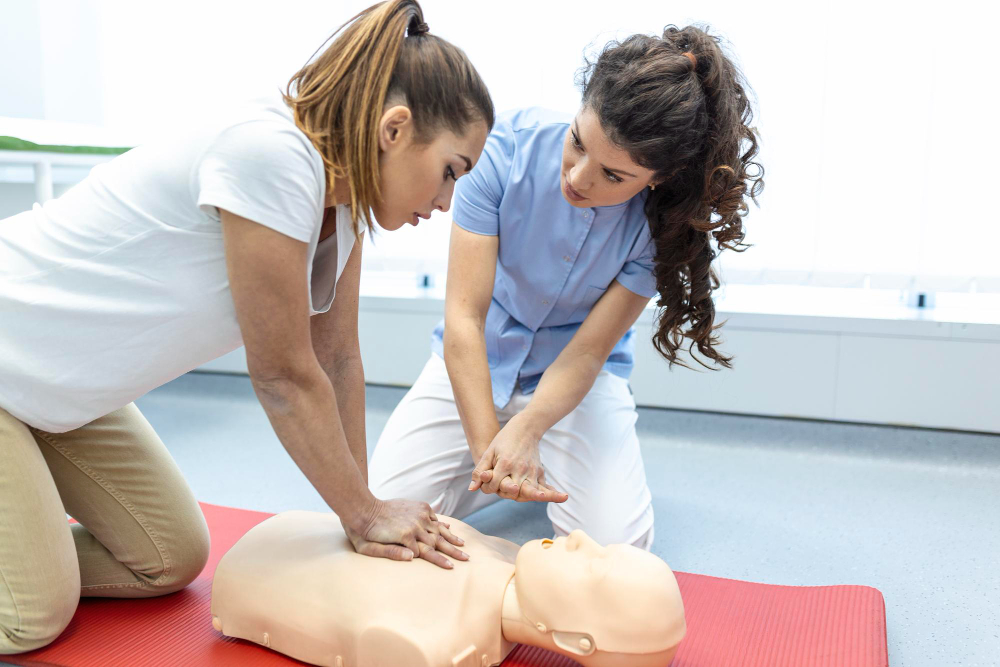
CPR and AED training covers real scenarios trainers may face on the gym floor:
- Recognizing the signs: labored breathing, chest pain, sudden collapse, or loss of consciousness
- Performing chest compressions correctly and knowing when to start
- Operating an AED safely and confidently, even under pressure
- Communicating clearly with emergency responders when they arrive
- Adjusting response techniques for different populations, including older adults and clients with health conditions
These skills don’t replace common sense or good judgment on the floor. However, they do give trainers a foundation to fall back on. A trainer who’s practiced these steps in a controlled setting reacts differently than someone seeing an emergency for the first time in a live gym.
Building on a Broader Foundation
CPR training doesn’t exist alone. It sits inside a bigger picture of what makes someone qualified to train clients safely. Trainers working with special populations, older adults, or clients recovering from injury need even more depth in this area.
Our Advanced Personal Fitness Training program builds on emergency response basics with corrective exercise techniques and specialized coaching for higher-risk clients. Students who want to work with specific groups, from athletes to seniors, often continue into our Personal Training Specialist track. Emergency preparedness gets applied to real-world coaching situations across different environments and client needs.
Learning That Fits Real Life
Students may juggle jobs, family responsibilities, or a move across state lines before they can commit to a full-time program. The HYFLEX learning model gives students flexibility to complete coursework online while still getting hands-on practice for skills like CPR and AED use.
This setup means a student can work through exercise science lessons and coaching theory on their own time, then come into the lab for the parts that require real repetition. Chest compressions, AED operation, and emergency scenario practice all happen in person, with instructors present to correct form and answer questions on the spot. Balance keeps online flexibility intact without cutting corners on the physical skills a trainer needs to use in an emergency.
Students moving from another state or country often lean on this flexibility as well, since it lets them begin coursework before they’ve fully relocated. The result is a path that adapts to a student’s life circumstances instead of asking them to rebuild their schedule around a rigid classroom model.
Why This Matters Beyond the Gym
Trainers train clients in homes, outdoor bootcamps, corporate wellness settings, and one-on-one studios. Emergency response training becomes even more valuable in these settings, since a trainer might be the only person present who knows how to respond. Knowing what to do in that moment can change the outcome for a client and their family.
This kind of preparation also shapes how trainers carry themselves day to day. Clients notice when a trainer takes safety seriously, and that awareness tends to show up in smaller ways too, like proper form cues, honest conversations about limits, and a calm presence during tough workouts.
Start Your Path With NPTI Florida
CPR and AED skills are part of what separates a trainer who’s simply enthusiastic about fitness from one who’s prepared to protect the people they work with. Deciding between options for a career in this field? Take a look at what a hands-on, accredited diploma program can offer. Get in touch with our admissions team to talk through your next steps.
FAQs
Most gyms and fitness facilities require current CPR and AED certification before a trainer can work with clients. It’s considered a baseline safety qualification across the industry, not an optional add-on.
CPR certifications typically expire every one to two years, depending on the certifying body. Trainers need to recertify regularly to keep their skills sharp and stay compliant with gym or employer requirements.
CPR covers chest compressions and rescue breathing techniques used during cardiac arrest. AED training teaches how to operate the defibrillator device itself, and the two are usually taught together as a combined skill set.
Yes. Trainers working in homes, outdoor bootcamps, or corporate wellness programs may be the only person present during an emergency. CPR and AED skills apply in any setting where a trainer works directly with clients.
Many accredited diploma programs fold CPR and AED training directly into the coursework rather than treating it as separate. This lets students build emergency response skills alongside exercise science and coaching techniques.