Fitness Professional Code of Ethics: Standards and Duties
A sound workout plan isn’t enough; professional conduct matters just as much. A fitness professional code of ethics centers on clients’ best interests, safe and evidence-aligned training, honest communication, privacy, and clear boundaries. It also means recognizing when a client’s needs fall outside a trainer’s role and referring them to a more qualified health or medical professional when appropriate.
Trust is built through more than exercise knowledge. Clients rely on fitness professionals to respect their goals, protect personal information, describe qualifications accurately, and avoid pressuring them to buy services or products they don’t need.
This guide explains the standards and responsibilities that shape professional practice, including client relationships, scope of practice, colleague conduct, and ongoing competence. It also covers possible organizational responses to standards violations, showing how ethical choices support client safety and a sustainable career.
Key Takeaways
- Get a client’s approval before using their testimonial, success story, or photos in marketing.
- Keep sessions focused and prioritize safe, client-centered decisions, especially when responding to an emergency.
- Stay within your training and scope, keep your knowledge current, and base coaching on sound professional practice.
- Build respectful relationships with colleagues by acting fairly and avoiding pressure tactics or client poaching.
- Ethics violations can affect professional standing, including eligibility for an organization or certification.
What Are Personal Trainer Professional Standards?
A fitness professional code of ethics guides trainers to put clients’ best interests first, work within their expertise, and treat people fairly. Professional boundaries include avoiding medical advice, unwanted sales pressure, and conflicts that could undermine the client relationship.
Integrity and Fairness
Integrity means being honest and respectful in professional relationships with clients, colleagues, and other health professionals. A trainer should prioritize a client’s safe, reasonable goals rather than impose personal preferences or recommend unnecessary services. Fair conduct also means respecting colleagues’ professional views and avoiding actions that take advantage of clients or peers.
Confidentiality and Professional Boundaries
Confidentiality means protecting personal information clients share during screening, assessment, and training. Handle records carefully and protect information in line with applicable privacy laws and regulations, including HIPAA. Before using a testimonial, success story, or before-and-after image in marketing or social media, obtain the client’s approval. A client’s progress is not permission to publish their experience.
Boundaries also mean separating coaching from personal interests. Don’t pressure clients to buy products or programs they don’t want, or steer them toward an option mainly for your benefit. Avoid conflicts of interest that could compromise professional judgment, including endorsements that undermine client-centered service. Trainers should not diagnose medical conditions or provide medical or physical therapy advice.
Referrals Beyond a Trainer’s Expertise
A referral means directing a client to a qualified health or medical professional when their needs exceed a trainer’s expertise. If a client asks for a diagnosis or raises a concern requiring medical judgment, don’t attempt to answer; refer them to an appropriate professional. You can then continue coaching within your scope, considering the client’s goals and relevant guidance.
Scope depends on the work and the professional’s education or licensure in that area. A professional’s scope of practice depends on their education, licensure, and the area in which they work. A fitness credential alone doesn’t authorize medical diagnoses, physical therapy advice, or individualized meal portions, timing, or supplement recommendations.
Screening and assessment provide a structured way to understand a client before planning and as training progresses. Ask about relevant goals and needs, assess the client initially, then reassess when their circumstances or program change. Use the findings to shape appropriate training, recognize requests beyond your expertise, and refer when needed.
Professional competence also means maintaining the education and experience needed to train clients appropriately. Continuing education helps trainers keep their knowledge current, and services should align with research and applicable local, state, and federal laws. These practices support sound decisions, safer programs, and a professional relationship built on trust.
Societal responsibilities and emergency training
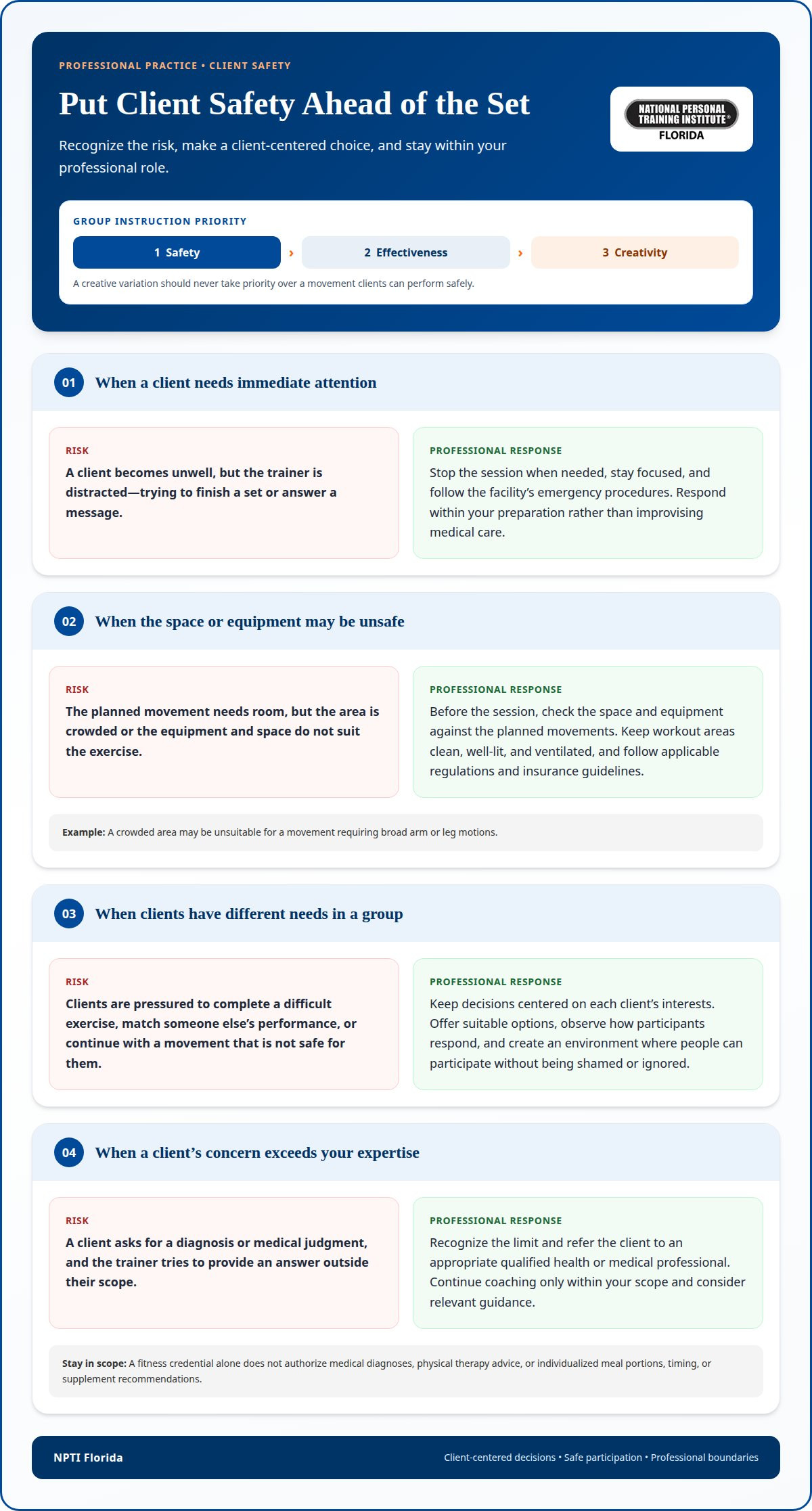
Societal responsibility means using fitness expertise to protect clients and support safe participation in exercise. During a session, personal trainers influence how people move, respond to discomfort, and interact with others. Decisions should reflect the client’s interests, not pressure to complete a difficult exercise or match someone else’s performance. In the fitness industry, this also means creating an environment where clients can participate without being shamed or ignored.
Emergency readiness means staying prepared to respond calmly when a client needs immediate attention. Trainers should stay focused, recognize when to stop a session, and follow the facility’s emergency procedures. A client who becomes unwell during exercise needs attention, not a distracted trainer trying to finish a set or answer a message. Emergency training helps professionals understand their role and respond within their preparation rather than improvise medical care.
A safe training environment is arranged and maintained to support exercise while reducing avoidable hazards. Fitness facilities and workout areas should be clean, well-lit, and ventilated, and comply with applicable regulations and insurance guidelines. Before a session, consider whether the equipment and space suit the planned movements. For example, a crowded area may be unsuitable for a movement requiring broad arm or leg motions. These checks support safety while keeping the client’s goals in view.
A positive training environment respects each participant while keeping movement choices safe and effective. For group fitness instructors, priorities are safety, effectiveness, then creativity. A creative variation should never take priority over a movement clients can perform safely. In group sessions, offer suitable options and observe how participants respond. This approach accommodates individual differences while keeping the group’s shared interests in view.
Scope of practice separates services a trainer’s education and qualifications prepare them to provide from work requiring other expertise. Personal trainers guide exercise and fitness, but shouldn’t provide medical diagnoses or medical or physical therapy advice. If a client describes a concern requiring medical judgment, recognize the limit and direct them to an appropriate professional. Staying within scope protects the client and supports responsible decisions.
Focus is an active safety practice, not simply being present in the room. During each session, observe the client’s movement, attend to their questions, and respond when their ability or comfort changes. Put away distractions and give the exercise your attention. If you’re building the practical foundation for this responsibility, explore professional fitness training education.
Professional standards and industry best practices
Professional standards translate ethical principles into daily decisions about training, recommendations, and business conduct. They help fitness professionals keep programs responsible, evidence-aligned, and centered on clients’ health and fitness.
Evidence-Based Competence and Recommendations
Professional competence means having the education and experience needed to provide appropriate fitness services. Trainers should maintain working knowledge of anatomy, physiology, biomechanics, functional training, basic nutrition, and exercise science. They can use this foundation to build varied, progressive programs suited to clients’ needs instead of repeating one routine for everyone.
Continuing education helps professionals keep their knowledge current as research and practice develop. Exercise physiologists, for example, should maintain competence through continued study of current laboratory techniques and research in preventive and rehabilitative services. In practice, a trainer can assess whether an exercise suits the client’s ability and goals, then adjust the program as those needs change.
Responsible sales conduct means recommending services and products based on a client’s needs, not personal gain. Explain how a program relates to the client’s stated goals and respect their decision to decline. Don’t present supplements as necessary for progress or steer clients toward purchases they don’t need or want. Personal trainers should also avoid meal plans with specific portions or timing, and dietary recommendations involving supplementation.
Impairment and Professional Practice
Impairment is a state that interferes with a professional’s ability to make sound judgments or perform their role safely. A trainer who cannot focus on a client’s movement or follow a program responsibly should not continue the session as planned. If fatigue or another condition disrupts attention, for example, stop and address the situation rather than risk missing changes in the client’s form or needs.
This standard connects personal conduct with professional responsibility. Before leading exercise, consider whether you can communicate clearly, observe clients, and make appropriate decisions. If not, don’t treat the session as routine business; follow relevant workplace procedures.
Fair Business Practices
Fair business practices mean dealing honestly with clients and conducting professional activities responsibly. Fitness facility owners and managers should uphold fair practices, ensure staff are qualified, and meet industry standards. For example, an organization should represent a trainer’s academic qualifications accurately rather than imply expertise beyond their education.
Clear communication supports fair decisions. Explain what a program includes, connect recommendations to health and fitness goals, and avoid misleading claims about results. Trainers should keep credentials and liability insurance current, while facilities should maintain workout areas that meet applicable regulations and insurance guidelines. These actions help align organizational conduct with client interests and professional standards.
Competition and avoiding unethical solicitations
Ethical competition means presenting your professional value without undermining colleagues or taking advantage of clients. Demonstrate your ability through accurate descriptions of qualifications, relevant experience, and services. Competition becomes unethical when it relies on misleading claims, pressure, or attempts to take another professional’s clients. Respectful conduct supports client choice and healthier working relationships across the fitness industry.
Solicitation is an effort to persuade someone to choose a service or professional relationship. It can be appropriate to explain your services to a prospective client who asks about training options. The boundary is crossed when a trainer aggressively pressures someone, misrepresents another professional, or uses access to a colleague’s clients to draw them away. Respectful competition leaves the decision with the client and avoids exploiting an existing professional relationship.
Client poaching means trying to take a colleague’s client through improper or unfair conduct. Fitness professionals should treat colleagues fairly, respect their views, and avoid poaching their clients. If a client already trains with another professional, don’t use that connection to undermine the colleague or solicit the client behind their back. If the client independently asks about your work, respond honestly without disparaging the other trainer. That distinction keeps the conversation focused on the client’s choice.
Professional associations and certification organizations can set standards that shape how members and certified professionals compete. The National Council for Certified Personal Trainers and IDEA are organizations with their own fitness-industry professional standards. These standards provide a reference for conduct with peers, clients, and other professionals. Understand the expectations that apply to your association or credential, then put them into practice in everyday interactions.
Fair competition also requires accurate professional representation. Describe your qualifications plainly, and don’t imply that a certification provides abilities it doesn’t cover. For example, explain your exercise-coaching experience without claiming medical expertise. Clients can then make informed choices based on the service actually offered, not an inflated comparison with another provider. Clear descriptions show confidence without pressure.
When a disagreement arises, keep your response professional and focused on specific conduct. Speak respectfully, avoid personal attacks, and don’t use a client conversation to spread unsupported claims about a colleague. If the concern involves conduct within an organization or association, use its appropriate process rather than escalating the dispute publicly. Fairness, respect, and commitment to clients’ interests strengthen trust.
Consequences of violations
A consequence is an action an organization may take after finding that a professional violated its standards. The outcome depends on the organization’s rules and the conduct involved, so treat a breach seriously.
Clients can report unethical conduct to the professional’s certifying organization or the fitness facility where it occurred. Describe what happened clearly, identify the professional, and follow the organization’s complaint instructions.
Organizations may remove a person from the organization or make them ineligible for certification after a standards violation. These actions can affect membership or certification standing. They illustrate why trainers should understand the guidelines tied to their credentials and follow their organization’s professional standards.
The conduct at issue matters. A complaint could concern a trainer crossing professional boundaries, misrepresenting qualifications, or treating clients unfairly. A client’s report should distinguish what they experienced directly from what they heard from someone else. Clear details help the organization understand the concern without turning the report into speculation about someone’s character.
When preparing a report, write down relevant events while they’re fresh. Include the session or interaction, what was said or done, and any direct witnesses. Keep related communications or records, then submit the information through the appropriate facility or certification organization process. Don’t alter records or add assumptions to strengthen a report.
Respectful reporting also matters when a concern involves colleagues. Fitness professionals should act with integrity and report incompetent, unethical, or illegal conduct through appropriate channels. Focus on specific actions and their effect rather than personal conflict. For instance, describe a trainer’s precise statement about a qualification instead of making a broad accusation about their ability.
Clients should understand the limits of organizational consequences. Removal from an organization or ineligibility for certification are possible responses, not automatic outcomes for every complaint. The organization’s standards and assessment of the reported conduct shape its response. A respectful, factual report gives the organization useful information and helps protect a fair process.
Preparing future trainers to understand boundaries and professional responsibility starts with strong education. Explore professional fitness training education as a next step toward responsible practice.
NPTI Florida: Personal Fitness Training Program
NPTI Florida’s Personal Fitness Training Program helps aspiring trainers build a practical foundation for responsible client coaching. Through classroom theory and hands-on training in a real working gym, students develop knowledge they can apply to exercise programming and professional interactions.
If you’re preparing for work with clients, the Personal Training Specialist Program offers a career-focused educational pathway. Those seeking more advanced study can explore the Advanced Personal Training Program, while Health and Nutrition Coaching focuses on coaching in that area.
Ethical standards guide how you apply your education, communicate with clients, and recognize the limits of your role. Contact NPTI Florida to discuss which program aligns with your professional goals.
Put Professional Standards Into Practice
Ethical practice grows through deliberate choices, made consistently as you build your career. The fitness professional code of ethics is more than a set of principles to remember; it should shape how you prepare, communicate, and make decisions for clients. Build that foundation through education connecting professional knowledge with real-world application.
NPTI Florida offers the Personal Fitness Training Program, Advanced Personal Training Program, and Personal Training Specialist Program for people preparing to work in fitness. Each provides a pathway to build skills and develop the judgment needed to serve clients responsibly. Choose the educational direction that best fits your career goals.
Contact NPTI Florida today to discuss your next step. With focused preparation and a commitment to ethical conduct, you can move forward with purpose and confidence.
Frequently Asked Questions
What is the Personal Trainer Code of Ethics?
A personal trainer code of ethics is a set of professional conduct standards that guides trainers’ decisions and relationships. The exact standards depend on the certification or professional organization involved; for example, NCCPT and IDEA each have fitness-industry standards. In practice, these guidelines help trainers consider clients’ interests, communicate qualifications honestly, respect professional boundaries, and recognize when a request falls beyond their role.
What is a fitness professional code of ethics?
A fitness professional code of ethics is a framework for responsible conduct across fitness roles, not only personal training. It helps professionals make choices that respect clients, colleagues, and the limits of their expertise. A code can guide decisions about promoting a product, discussing another trainer’s work, or whether a service suits a client’s needs. Requirements vary by organization.
What ethical principles should fitness professionals follow?
Fitness professionals should act with honesty, fairness, respect, and accountability. They should prioritize clients’ safe and reasonable goals, describe their qualifications accurately, and avoid pressuring people into unwanted purchases. When recommending a program, for instance, explain its relevance to the client’s stated goals rather than presenting it as essential. Professionals should also keep their knowledge current and base services on research-aligned practice.
What are fitness professionals’ responsibilities for client safety and scope of practice?
Fitness professionals should plan and coach exercise within their education, experience, and role. A trainer can adjust an exercise when a client struggles with the movement, but shouldn’t diagnose the cause of pain or provide physical therapy advice. Refer the client when medical judgment is needed. During group exercise, instructors should prioritize safety, effectiveness, then creativity.
What ethical rules govern client confidentiality and privacy in fitness training?
Fitness professionals should protect clients’ personal information in line with applicable privacy laws and regulations, including HIPAA. Avoid discussing an identifiable client’s assessment or progress in public spaces or casual conversations. Obtain the client’s approval before using their testimonial, success story, or image in marketing or social media. Make permission specific to the material and its intended use.
How should fitness professionals handle informed consent and client records?
Informed consent means explaining a planned activity clearly and giving the client a chance to ask questions before proceeding. For example, outline what an assessment involves and let the client decide whether to continue. Keep records accurate and relevant, including assessment findings, agreed goals, and meaningful program changes. Store information securely and limit access according to applicable privacy requirements and facility procedures.
What are the consequences of violating a fitness certification code of ethics?
A certifying or professional organization may remove a person or make them ineligible for certification after a standards violation. To report conduct, submit a factual account to the relevant organization or fitness facility through its complaint process. Include specific actions and relevant details, distinguishing firsthand experience from assumptions. The organization’s standards and its review of the report shape the response.

A sound workout plan isn’t enough; professional conduct matters just as much. A fitness professional code of ethics centers on clients’ best interests, safe and evidence-aligned training, honest communication, privacy, and clear boundaries. It also means recognizing when a client’s needs fall outside a trainer’s role and referring them to a more qualified health or medical professional when appropriate.
Trust is built through more than exercise knowledge. Clients rely on fitness professionals to respect their goals, protect personal information, describe qualifications accurately, and avoid pressuring them to buy services or products they don’t need.
This guide explains the standards and responsibilities that shape professional practice, including client relationships, scope of practice, colleague conduct, and ongoing competence. It also covers possible organizational responses to standards violations, showing how ethical choices support client safety and a sustainable career.
Key Takeaways
- Get a client’s approval before using their testimonial, success story, or photos in marketing.
- Keep sessions focused and prioritize safe, client-centered decisions, especially when responding to an emergency.
- Stay within your training and scope, keep your knowledge current, and base coaching on sound professional practice.
- Build respectful relationships with colleagues by acting fairly and avoiding pressure tactics or client poaching.
- Ethics violations can affect professional standing, including eligibility for an organization or certification.
What Are Personal Trainer Professional Standards?
A fitness professional code of ethics guides trainers to put clients’ best interests first, work within their expertise, and treat people fairly. Professional boundaries include avoiding medical advice, unwanted sales pressure, and conflicts that could undermine the client relationship.
Integrity and Fairness
Integrity means being honest and respectful in professional relationships with clients, colleagues, and other health professionals. A trainer should prioritize a client’s safe, reasonable goals rather than impose personal preferences or recommend unnecessary services. Fair conduct also means respecting colleagues’ professional views and avoiding actions that take advantage of clients or peers.
Confidentiality and Professional Boundaries
Confidentiality means protecting personal information clients share during screening, assessment, and training. Handle records carefully and protect information in line with applicable privacy laws and regulations, including HIPAA. Before using a testimonial, success story, or before-and-after image in marketing or social media, obtain the client’s approval. A client’s progress is not permission to publish their experience.
Boundaries also mean separating coaching from personal interests. Don’t pressure clients to buy products or programs they don’t want, or steer them toward an option mainly for your benefit. Avoid conflicts of interest that could compromise professional judgment, including endorsements that undermine client-centered service. Trainers should not diagnose medical conditions or provide medical or physical therapy advice.
Referrals Beyond a Trainer’s Expertise
A referral means directing a client to a qualified health or medical professional when their needs exceed a trainer’s expertise. If a client asks for a diagnosis or raises a concern requiring medical judgment, don’t attempt to answer; refer them to an appropriate professional. You can then continue coaching within your scope, considering the client’s goals and relevant guidance.
Scope depends on the work and the professional’s education or licensure in that area. A professional’s scope of practice depends on their education, licensure, and the area in which they work. A fitness credential alone doesn’t authorize medical diagnoses, physical therapy advice, or individualized meal portions, timing, or supplement recommendations.
Screening and assessment provide a structured way to understand a client before planning and as training progresses. Ask about relevant goals and needs, assess the client initially, then reassess when their circumstances or program change. Use the findings to shape appropriate training, recognize requests beyond your expertise, and refer when needed.
Professional competence also means maintaining the education and experience needed to train clients appropriately. Continuing education helps trainers keep their knowledge current, and services should align with research and applicable local, state, and federal laws. These practices support sound decisions, safer programs, and a professional relationship built on trust.
Societal responsibilities and emergency training
Societal responsibility means using fitness expertise to protect clients and support safe participation in exercise. During a session, personal trainers influence how people move, respond to discomfort, and interact with others. Decisions should reflect the client’s interests, not pressure to complete a difficult exercise or match someone else’s performance. In the fitness industry, this also means creating an environment where clients can participate without being shamed or ignored.
Emergency readiness means staying prepared to respond calmly when a client needs immediate attention. Trainers should stay focused, recognize when to stop a session, and follow the facility’s emergency procedures. A client who becomes unwell during exercise needs attention, not a distracted trainer trying to finish a set or answer a message. Emergency training helps professionals understand their role and respond within their preparation rather than improvise medical care.
A safe training environment is arranged and maintained to support exercise while reducing avoidable hazards. Fitness facilities and workout areas should be clean, well-lit, and ventilated, and comply with applicable regulations and insurance guidelines. Before a session, consider whether the equipment and space suit the planned movements. For example, a crowded area may be unsuitable for a movement requiring broad arm or leg motions. These checks support safety while keeping the client’s goals in view.
A positive training environment respects each participant while keeping movement choices safe and effective. For group fitness instructors, priorities are safety, effectiveness, then creativity. A creative variation should never take priority over a movement clients can perform safely. In group sessions, offer suitable options and observe how participants respond. This approach accommodates individual differences while keeping the group’s shared interests in view.
Scope of practice separates services a trainer’s education and qualifications prepare them to provide from work requiring other expertise. Personal trainers guide exercise and fitness, but shouldn’t provide medical diagnoses or medical or physical therapy advice. If a client describes a concern requiring medical judgment, recognize the limit and direct them to an appropriate professional. Staying within scope protects the client and supports responsible decisions.
Focus is an active safety practice, not simply being present in the room. During each session, observe the client’s movement, attend to their questions, and respond when their ability or comfort changes. Put away distractions and give the exercise your attention. If you’re building the practical foundation for this responsibility, explore professional fitness training education.
Professional standards and industry best practices
Professional standards translate ethical principles into daily decisions about training, recommendations, and business conduct. They help fitness professionals keep programs responsible, evidence-aligned, and centered on clients’ health and fitness.
Evidence-Based Competence and Recommendations
Professional competence means having the education and experience needed to provide appropriate fitness services. Trainers should maintain working knowledge of anatomy, physiology, biomechanics, functional training, basic nutrition, and exercise science. They can use this foundation to build varied, progressive programs suited to clients’ needs instead of repeating one routine for everyone.
Continuing education helps professionals keep their knowledge current as research and practice develop. Exercise physiologists, for example, should maintain competence through continued study of current laboratory techniques and research in preventive and rehabilitative services. In practice, a trainer can assess whether an exercise suits the client’s ability and goals, then adjust the program as those needs change.
Responsible sales conduct means recommending services and products based on a client’s needs, not personal gain. Explain how a program relates to the client’s stated goals and respect their decision to decline. Don’t present supplements as necessary for progress or steer clients toward purchases they don’t need or want. Personal trainers should also avoid meal plans with specific portions or timing, and dietary recommendations involving supplementation.
Impairment and Professional Practice
Impairment is a state that interferes with a professional’s ability to make sound judgments or perform their role safely. A trainer who cannot focus on a client’s movement or follow a program responsibly should not continue the session as planned. If fatigue or another condition disrupts attention, for example, stop and address the situation rather than risk missing changes in the client’s form or needs.
This standard connects personal conduct with professional responsibility. Before leading exercise, consider whether you can communicate clearly, observe clients, and make appropriate decisions. If not, don’t treat the session as routine business; follow relevant workplace procedures.
Fair Business Practices
Fair business practices mean dealing honestly with clients and conducting professional activities responsibly. Fitness facility owners and managers should uphold fair practices, ensure staff are qualified, and meet industry standards. For example, an organization should represent a trainer’s academic qualifications accurately rather than imply expertise beyond their education.
Clear communication supports fair decisions. Explain what a program includes, connect recommendations to health and fitness goals, and avoid misleading claims about results. Trainers should keep credentials and liability insurance current, while facilities should maintain workout areas that meet applicable regulations and insurance guidelines. These actions help align organizational conduct with client interests and professional standards.
Competition and avoiding unethical solicitations
Ethical competition means presenting your professional value without undermining colleagues or taking advantage of clients. Demonstrate your ability through accurate descriptions of qualifications, relevant experience, and services. Competition becomes unethical when it relies on misleading claims, pressure, or attempts to take another professional’s clients. Respectful conduct supports client choice and healthier working relationships across the fitness industry.
Solicitation is an effort to persuade someone to choose a service or professional relationship. It can be appropriate to explain your services to a prospective client who asks about training options. The boundary is crossed when a trainer aggressively pressures someone, misrepresents another professional, or uses access to a colleague’s clients to draw them away. Respectful competition leaves the decision with the client and avoids exploiting an existing professional relationship.
Client poaching means trying to take a colleague’s client through improper or unfair conduct. Fitness professionals should treat colleagues fairly, respect their views, and avoid poaching their clients. If a client already trains with another professional, don’t use that connection to undermine the colleague or solicit the client behind their back. If the client independently asks about your work, respond honestly without disparaging the other trainer. That distinction keeps the conversation focused on the client’s choice.
Professional associations and certification organizations can set standards that shape how members and certified professionals compete. The National Council for Certified Personal Trainers and IDEA are organizations with their own fitness-industry professional standards. These standards provide a reference for conduct with peers, clients, and other professionals. Understand the expectations that apply to your association or credential, then put them into practice in everyday interactions.
Fair competition also requires accurate professional representation. Describe your qualifications plainly, and don’t imply that a certification provides abilities it doesn’t cover. For example, explain your exercise-coaching experience without claiming medical expertise. Clients can then make informed choices based on the service actually offered, not an inflated comparison with another provider. Clear descriptions show confidence without pressure.
When a disagreement arises, keep your response professional and focused on specific conduct. Speak respectfully, avoid personal attacks, and don’t use a client conversation to spread unsupported claims about a colleague. If the concern involves conduct within an organization or association, use its appropriate process rather than escalating the dispute publicly. Fairness, respect, and commitment to clients’ interests strengthen trust.
Consequences of violations
A consequence is an action an organization may take after finding that a professional violated its standards. The outcome depends on the organization’s rules and the conduct involved, so treat a breach seriously.
Clients can report unethical conduct to the professional’s certifying organization or the fitness facility where it occurred. Describe what happened clearly, identify the professional, and follow the organization’s complaint instructions.
Organizations may remove a person from the organization or make them ineligible for certification after a standards violation. These actions can affect membership or certification standing. They illustrate why trainers should understand the guidelines tied to their credentials and follow their organization’s professional standards.
The conduct at issue matters. A complaint could concern a trainer crossing professional boundaries, misrepresenting qualifications, or treating clients unfairly. A client’s report should distinguish what they experienced directly from what they heard from someone else. Clear details help the organization understand the concern without turning the report into speculation about someone’s character.
When preparing a report, write down relevant events while they’re fresh. Include the session or interaction, what was said or done, and any direct witnesses. Keep related communications or records, then submit the information through the appropriate facility or certification organization process. Don’t alter records or add assumptions to strengthen a report.
Respectful reporting also matters when a concern involves colleagues. Fitness professionals should act with integrity and report incompetent, unethical, or illegal conduct through appropriate channels. Focus on specific actions and their effect rather than personal conflict. For instance, describe a trainer’s precise statement about a qualification instead of making a broad accusation about their ability.
Clients should understand the limits of organizational consequences. Removal from an organization or ineligibility for certification are possible responses, not automatic outcomes for every complaint. The organization’s standards and assessment of the reported conduct shape its response. A respectful, factual report gives the organization useful information and helps protect a fair process.
Preparing future trainers to understand boundaries and professional responsibility starts with strong education. Explore professional fitness training education as a next step toward responsible practice.
NPTI Florida: Personal Fitness Training Program
NPTI Florida’s Personal Fitness Training Program helps aspiring trainers build a practical foundation for responsible client coaching. Through classroom theory and hands-on training in a real working gym, students develop knowledge they can apply to exercise programming and professional interactions.
If you’re preparing for work with clients, the Personal Training Specialist Program offers a career-focused educational pathway. Those seeking more advanced study can explore the Advanced Personal Training Program, while Health and Nutrition Coaching focuses on coaching in that area.
Ethical standards guide how you apply your education, communicate with clients, and recognize the limits of your role. Contact NPTI Florida to discuss which program aligns with your professional goals.
Put Professional Standards Into Practice
Ethical practice grows through deliberate choices, made consistently as you build your career. The fitness professional code of ethics is more than a set of principles to remember; it should shape how you prepare, communicate, and make decisions for clients. Build that foundation through education connecting professional knowledge with real-world application.
NPTI Florida offers the Personal Fitness Training Program, Advanced Personal Training Program, and Personal Training Specialist Program for people preparing to work in fitness. Each provides a pathway to build skills and develop the judgment needed to serve clients responsibly. Choose the educational direction that best fits your career goals.
Contact NPTI Florida today to discuss your next step. With focused preparation and a commitment to ethical conduct, you can move forward with purpose and confidence.
Frequently Asked Questions
What is the Personal Trainer Code of Ethics?
A personal trainer code of ethics is a set of professional conduct standards that guides trainers’ decisions and relationships. The exact standards depend on the certification or professional organization involved; for example, NCCPT and IDEA each have fitness-industry standards. In practice, these guidelines help trainers consider clients’ interests, communicate qualifications honestly, respect professional boundaries, and recognize when a request falls beyond their role.
What is a fitness professional code of ethics?
A fitness professional code of ethics is a framework for responsible conduct across fitness roles, not only personal training. It helps professionals make choices that respect clients, colleagues, and the limits of their expertise. A code can guide decisions about promoting a product, discussing another trainer’s work, or whether a service suits a client’s needs. Requirements vary by organization.
What ethical principles should fitness professionals follow?
Fitness professionals should act with honesty, fairness, respect, and accountability. They should prioritize clients’ safe and reasonable goals, describe their qualifications accurately, and avoid pressuring people into unwanted purchases. When recommending a program, for instance, explain its relevance to the client’s stated goals rather than presenting it as essential. Professionals should also keep their knowledge current and base services on research-aligned practice.
What are fitness professionals’ responsibilities for client safety and scope of practice?
Fitness professionals should plan and coach exercise within their education, experience, and role. A trainer can adjust an exercise when a client struggles with the movement, but shouldn’t diagnose the cause of pain or provide physical therapy advice. Refer the client when medical judgment is needed. During group exercise, instructors should prioritize safety, effectiveness, then creativity.
What ethical rules govern client confidentiality and privacy in fitness training?
Fitness professionals should protect clients’ personal information in line with applicable privacy laws and regulations, including HIPAA. Avoid discussing an identifiable client’s assessment or progress in public spaces or casual conversations. Obtain the client’s approval before using their testimonial, success story, or image in marketing or social media. Make permission specific to the material and its intended use.
How should fitness professionals handle informed consent and client records?
Informed consent means explaining a planned activity clearly and giving the client a chance to ask questions before proceeding. For example, outline what an assessment involves and let the client decide whether to continue. Keep records accurate and relevant, including assessment findings, agreed goals, and meaningful program changes. Store information securely and limit access according to applicable privacy requirements and facility procedures.
What are the consequences of violating a fitness certification code of ethics?
A certifying or professional organization may remove a person or make them ineligible for certification after a standards violation. To report conduct, submit a factual account to the relevant organization or fitness facility through its complaint process. Include specific actions and relevant details, distinguishing firsthand experience from assumptions. The organization’s standards and its review of the report shape the response.